
Why the Best School for Your 19-Year-Old Might Not Be a School at All
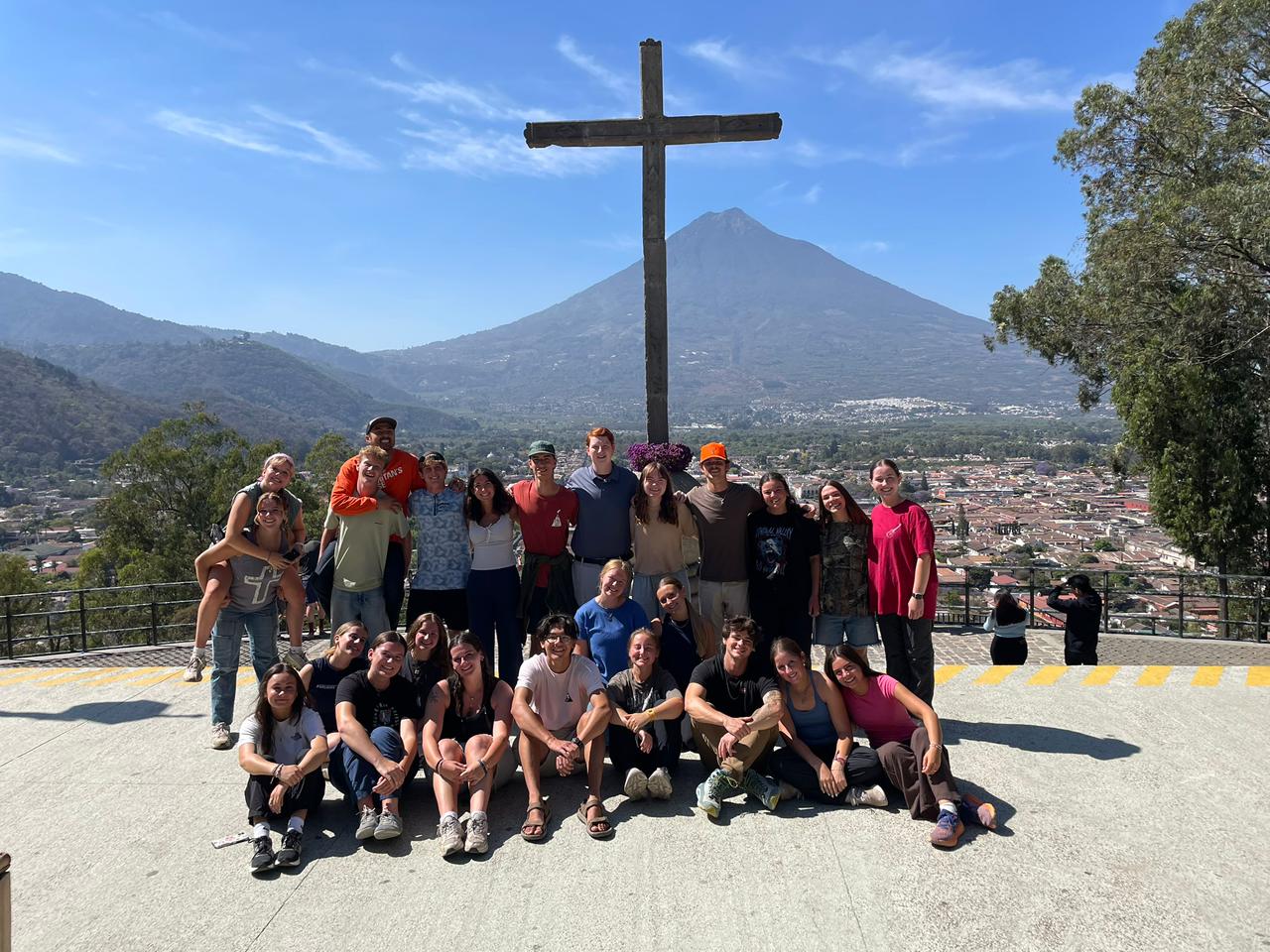
I watched something happen in Guatemala a few weeks ago that I have not been able to shake. We had two groups of young people serving side by side at ...
I watched something happen in Guatemala a few weeks ago that I have not been able to shake.
We had two groups of young people serving side by side at one of our ministry sites. One group had been on the field for months, living in community, sleeping on hard beds, navigating the awkwardness and exhaustion of doing life together in a foreign country. The other group was newer, still in their first semester, still tethered to the comforts of home in ways they did not even realize yet.
You could see the difference within the first hour. The students who had been through the struggle were noticeably more mature. They carried themselves differently. Not because anyone had given them a lecture on maturity or handed them a syllabus on spiritual formation, but because something had happened to them in the crucible of real life that no classroom could replicate. They had been broken open by the kind of disorientation that comes when you lose access to everything familiar and the only thing left is God and the people standing next to you.
The newer students were sharp kids. Bright. Well-intentioned. But they were over-organized and under-challenged. A few of their parents were still sending them Uber Eats money. One mom was texting her daughter multiple times a day. These were loving parents doing what loving parents do, and in doing so, they were quietly robbing their children of the very thing they came to find.
We missed it. And I say "we" because the system we built allowed it to happen.
That moment has stayed with me because it captures something I have been wrestling with for a long time now. We have built an entire culture around the idea that the way you prepare a young person for adulthood is to send them to a place where someone stands at the front of a room and talks at them for four years while they accumulate debt. And for decades, that model worked well enough that nobody questioned it. But the cracks are showing, and if you are a parent of a teenager right now, you can feel it even if you cannot quite name it.
The Script That Stopped Working
For most of the twentieth century, the American path was straightforward. You graduated high school, went to college, got a degree, and used that degree to get a job that would provide stability and meaning for the rest of your life. It was a conveyor belt, and the whole thing ran on a simple promise: if you follow the steps, the system will take care of you.
That promise is broken.
The average cost of a four-year degree has increased by more than 1,200 percent since 1980. Student loan debt in this country has passed $1.7 trillion, which is more than credit card debt and auto loans combined. And the return on that investment is shrinking every year. Sixty percent of employers now say they would rather hire someone with real-world experience and demonstrated hunger than someone with a diploma and no idea what they want to do with it. Congress just passed a law extending Pell Grants to short-term credential programs because even the federal government has acknowledged that a four-year degree is no longer the only legitimate path forward.
Meanwhile, a generation of young people are graduating into a world where the jobs they trained for are being automated, where the institutions they were told to trust have let them down, and where the existential questions that matter most to them have never been addressed. They come out of college with a degree and a mountain of debt and the same haunting question they had at eighteen: Who am I, and what am I supposed to do with my life?
The old model was built on the assumption that if you give a young person enough information, they will figure out who they are. But information has never been the bottleneck. We are the most informed generation in human history, and we are also the most anxious, the most medicated, and the most spiritually disoriented. Knowledge without formation is just noise.
What Jesus Knew About Discipleship
Jesus did not open a school. He called twelve men to walk with him for three years. They did not sit in rows and take notes. They traveled. They served. They failed publicly. They watched him interact with the broken and the powerful and the invisible, and slowly, over the course of years, their identities were reshaped by proximity to someone who lived what he taught.
Three years. Not a semester. Not a weekend retreat. Three years of eating together and sleeping on the ground together and having their assumptions dismantled in real time. And even then, some of them still did not fully get it until after he was gone and the Holy Spirit arrived to finish the work.
I think about that timeline constantly. We have been running programs that send young people into intense experiences for a few months at a time, and the transformation we see in those windows is remarkable. But we have also learned the hard way that when you send a twenty-year-old back into the same environment that shaped them, with no ongoing support and no community to hold them accountable, the growth often fades. The old patterns reassert themselves. The toxic relationships pull them back. The comforts that feel so good in the moment quietly erode the character that was starting to take shape.
We knew this. We have known it for twenty years. And we kept doing it anyway because one semester felt manageable and three years felt like too much to ask of a generation that is terrified of commitment.
But what if that fear of commitment is itself the thing that needs to be healed?
The Moat Nobody Has Built Yet
Here is what I believe. If we can figure out how to walk with young people through a multi-year formation process, one that combines real-world challenge with genuine community and spiritual depth and legitimate academic credit, we will have something that nobody else in the world has cracked. Not the universities, which are hemorrhaging credibility. Not the gap year industry, which is still mostly selling adventure tourism. Not the church, which has largely outsourced the discipleship of its young people to institutions that do not share its values.
The generation coming up right now is skittish about commitment and does not know how to trust. That is not a character flaw. It is the predictable outcome of growing up in a world where every institution they have encountered has either failed them or tried to sell them something. The church declined. The political system fractured. The economy promised stability and delivered precarity. Social media promised connection and delivered isolation. Of course they are hesitant to commit. Every time they have committed to something, it has disappointed them.
So the question is not how do we convince them to commit. The question is how do we build something worth committing to.
I believe the answer looks like this: a school that does not feel like a school. A community that travels together and serves together and struggles together across multiple countries over the course of years, not months. A place where the curriculum is not a textbook but the world itself, where the teachers are mentors who have been through their own formation and can speak from experience rather than theory, and where the measure of success is not a GPA but the observable transformation of a human life.
The first principle has to be that the students love being there. Not in a consumer satisfaction sense, but in the way you love something that is hard and meaningful and that you chose freely. You tap into their intrinsic motivation by giving them real problems to solve and real people to serve and real consequences for their choices, not by making the experience comfortable enough to tolerate.
Why Parents Are the Key
I need to say something to the parents reading this, because I know you are the ones who will ultimately make this decision.
The hardest thing you will ever do is let your child suffer in a way that produces growth. Every instinct in your body will tell you to intervene, to soften the blow, to send money, to make the call, to fix the problem. And those instincts come from a good place. You love your kid. You have spent eighteen years building a world around them, and the thought of them struggling in a foreign country with no safety net feels like a failure of your responsibility as a parent.
But here is what I have watched happen thousands of times over four decades of ministry. The parents who released their children into the struggle got them back transformed. The parents who rescued their children from the struggle got them back exactly the same.
I am not talking about abandonment. I am talking about the kind of intentional release that says, "I trust that God is doing something in you that I cannot do, and I am going to cooperate with that process even when it costs me." It is the most counterintuitive act of love a parent can perform, and it is the one that bears the most fruit.
The data backs this up in ways that might surprise you. Students who take a structured, intentional gap year before college return more focused, carry higher GPAs through all four years, and graduate on time at rates that exceed their peers who went straight through. Harvard encourages up to 130 admitted students every year to defer and take one. Colorado College wants twenty percent of its incoming class to have taken one because those students outperform everyone else.
But the kind of formation I am describing goes beyond a single gap year. It looks more like what Jesus modeled, a multi-year journey through discomfort and discovery and community, with mentors who are willing to be honest about their own failures and students who are given the space to fail and recover and try again.
What 2026 Might Look Like
Something is shifting and I can feel it. The old model of higher education is dying, not because education is unimportant, but because the delivery mechanism has become so bloated and disconnected from reality that it no longer serves the people it was designed for. At the same time, a generation of young people are quietly hungry for something real. They are not running from God. They are running from performance. They are not afraid of hard things. They are afraid of meaningless things.
I think 2026 might be the year we stop trying to fit these young people into systems that were built for a world that no longer exists and start building something new. Not a replacement for college, but a predecessor to it. A formation experience so deep and so real that by the time a student arrives at a university, they know who they are, they know why they are there, and they know who they belong to.
That is the vision we are building toward with Journey School. It is messy and incomplete and we are learning as we go. But I have watched enough young lives be transformed in the crucible of real-world discipleship to know that we are onto something. The question is not whether this kind of formation works. The evidence for that has been accumulating for two thousand years.
The question is whether we have the courage to offer it, and whether you have the courage to say yes.
Tags: Gen Z , Education , college , Missions , journey-school , Faith , Discipleship , radical-living
Related Blogs
Why I’m More Hopeful About Gen Z Than the Headlines Suggest
If you’re a parent, pastor, or mentor trying to understand Gen Z, the headlin...

The Diploma Is No Longer King. And That Changes Everything.
Something happened this summer that barely made the news. Congress passed a law ...

Why Gen Z Men Are Quietly Returning to Church - And What It Means for Parents
Sometimes a change begins before we know what to call it. It doesn’t make the ...