
The Church Gen Z Actually Wants Is the One We're Afraid to Be
I've spent decades mentoring young leaders. I've watched thousands of them come through our World Race programs, show up at training camps w...
I've spent decades mentoring young leaders. I've watched thousands of them come through our World Race programs, show up at training camps with packed bags and guarded hearts, trying to figure out if God is real and if His people can be trusted. And after all this time, I can tell you the single most common reason they almost didn't come.
It wasn't theology. It wasn't doubt about the existence of God.
It was the church.
Not all of them will say it that directly. Some will tell you they got burned by a youth pastor who turned out to be someone different behind closed doors. Others will describe the slow erosion of watching their parents perform on Sunday mornings and then fall apart by Tuesday. A few will simply say they got tired of the smiling and the pretending and the way everyone seemed to have it all together when they clearly did not.
A seminary graduate named Matt Russell spent nine months interviewing people who had left the church. He didn't try to convince them to come back. He just asked them to tell their stories. And what he found haunts me. Most people didn't leave because they had a problem with the resurrection or the virgin birth. Russell wrote in Christianity Today, "People in the church were more invested in the process of being right than in the process of being honest."
That sentence should keep every pastor and ministry leader up at night.
The Hunger Beneath the Headlines
Here's what the headlines miss. The narrative we keep hearing is that Gen Z is leaving the church in droves, that secularism is winning, that the "nones" are rising. And sure, the Barna numbers on church attendance are sobering. But there's a quieter story emerging underneath those stats that most people haven't noticed yet.
Nearly three in ten young adults who don't even identify as Christian still affirm a personal commitment to Jesus. Two-thirds of Gen Z respondents told Barna they prayed to God within the past week. More than a third read Scripture in that same window. This is not a generation running from God. This is a generation running from performance.
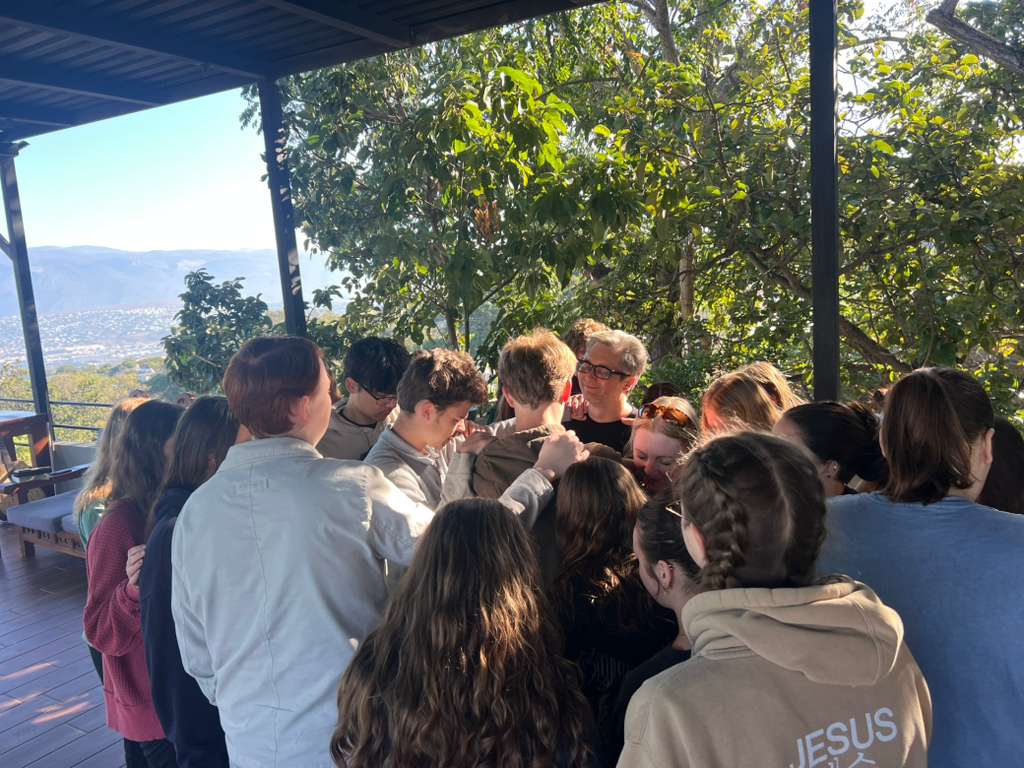
I think about a young woman I'll call Sue who came to one of our ministry programs overseas. Her story was woven with disillusionment and pain. Church trauma. Mental health struggles. Fractured family ties. She had come to the edge of the world to ask God if He was still real. She didn't show up looking for better theology or a more polished worship set. Sue came looking for an authentic relationship and a community where she could be accepted. I've seen that hunger again and again, and it almost always comes unannounced. Not through church programs but through burnout, through longing.
These young adults have grown up in a world saturated with distraction and performance. Beneath all that noise, there is a single aching question: Is there anyone out there who will be real with me?
What Vulnerability Actually Costs
Years ago I was leading a ministry staff retreat, and I could sense that many of the staff were in a bad place. Burned out from a summer of ministry. One woman in particular seemed to have it out for me. She was critical, and her attitude was pulling others down with her. I prayed about it. "God, what should I do?"
"Wash her feet," He said.
That is not the answer any leader wants to hear. I wanted a strategy. A confrontation plan. A way to reassert authority. Instead, God asked me to kneel. So I did. I washed her feet, and when I did, the atmosphere in the room shifted. The tension drained out. She lowered her defenses. The rest of the staff felt safe. We began to share at a new level, and the retreat became something none of us expected.
That experience taught me something I've been learning and relearning ever since. My successes just made people feel inferior. But my failures gave them permission to take risks. My vulnerability became a paradoxical source of strength for others.
This is one reason AA groups are better church than most churches. They recognize that spiritual growth begins with vulnerability. In an AA meeting, you start by sharing your weaknesses, leveling the playing field, showing that it is safe to be weak. From that low place, freedom and healing become available to everyone. James said it plainly: God opposes the proud but gives grace to the humble.
The church should be the safest place on earth to not have it together. Instead, we've made it a stage.
The Filter They've Built
Gen Z has developed what I'd call an authenticity filter, and it is ruthlessly effective. They have been the most marketed-to generation in history. They've watched influencers sell them products while pretending to be their friends. They've seen political leaders lie on camera without flinching. They've scrolled past more curated, filtered, manufactured content than any generation before them.
So when they walk into a church and the pastor delivers a polished talk from behind plexiglass confidence, never once admitting he struggled with his own sermon that week, never once saying "I don't know," something in them just quietly shuts off. It's not rebellion. It's self-preservation. They've been trained by a thousand disappointments to recognize when someone is performing rather than being present.
As one Christianity Today piece noted, young Christians don't want to hear the proposition "Here's what the Bible says and here's what I have to say about it." They want to know how it makes you feel, how you struggle to believe it, where the gaps in your understanding might be, the steps you took to grow in your faith, and what it's done for your everyday life. Not as a pastor first, but as a person first.
This is not a lower standard. It is a devastatingly higher one. Yes, we need good biblical exegesis, but unless we begin address this issue of authenticity and lead with vulnerability, we will lose our young people.
What Young Racers Teach Me
I founded Adventures in Missions, and for years the World Race has been our petri dish for vulnerable leadership. We send young people to the nations for months at a time, strip away the comforts and the performances, and watch what happens when community gets raw.
What we've found, over and over, is simple. Every time we had leaders who led with vulnerability, others felt safe enough to begin sharing their weaknesses too. Those teams bonded. Those teams became places of genuine growth. And every time leaders showed up with armor on, projecting strength and pretending to have all the answers, the teams stayed shallow. People smiled and nodded and kept their real struggles locked in their journals where no one could see.
Austin Himsel is an eighteen-year-old from New Hampshire in Journey School. He wrote honestly about the fear that gripped him through most of high school, the anxiety about the future, the not knowing what came next. He didn't dress it up. He just told the truth. And that truth is precisely what made people lean in.
Jameson Reiling, another young man who is on the field, wrote about watching his sister go on the World Race before him and seeing how she was genuinely transformed. Not by perfect leadership or flawless programming, but by the kind of community where people could be honest about what they didn't have figured out.
That's the pattern. Young people are not drawn to leaders who have arrived. They are drawn to leaders who are honest about still being on the way.
A Recovery Group, Not a Country Club
One of the people Russell interviewed during his research on church "leavers" said something that has stuck with me for years: "Just because you shellac a bunch of Jesus over your life doesn't make it right." That's crude, but it's accurate. And the people who said things like that weren't atheists. They were recovering addicts, people struggling with eating disorders, men and women battling depression who had tried confession and church attendance and small groups and Bible studies, and still couldn't get free because nobody would let them get honest.
After those nine months of interviews, Russell invited thirty of those people to dinner and asked a question: "What if we formed a community that's honest, that welcomes those who feel disconnected and spiritually homeless?" And they said yes. They wanted to be part of creating a church where they could be vulnerable with each other as a way of growing spiritually.
Here's the uncomfortable takeaway. Churches need to ask themselves a very hard question: are we more interested in being right or in being honest? And if the answer is "being right," then we need to repent. Because a church that values correctness over confession will always produce performers, not disciples.
Gen Z can smell the difference.
What the Quiet Revival Looks Like
The revival stirring in this generation is not platformed. It's quiet. It's happening on long walks and in journaling sessions and in whispered prayers in the middle of the night. It's messy, the way most true revivals are. The metrics are less about attendance and more about intimacy.
Many of us in the older generations have spent years lamenting their disengagement. But what if we've been asking the wrong question? We keep asking "How do we bring them back?" when the better question is "How do we honor the hunger that's already there?"
We do that by making space. By sharing our own scars. By stepping back from the stage lights and into sacred listening. By telling them they are not alone in their doubts and desires. By building communities that look less like performances and more like recovery groups where the first step is always the same: admitting you don't have it all together.
This generation doesn't need perfection. They need presence. They need people who will wade into the mess with them, point to Jesus, and stay.
Jesus was the ultimate vulnerable leader. Born in a barn. Homeless by choice. Tempted in a desert. Weeping in a garden. Dying on a cross. If we want to represent Him, we can't do it from behind a mask of competence. We can only do it by dropping to our knees, basin in hand, willing to wash the feet of the very people who are angry with us.
The church Gen Z actually wants is the one most of us are afraid to be. Unpolished. Unfinished. Honest about its limp.
It turns out that's the only kind of church worth being.
Tags: genz , church , vulnerability , authentic leadership , spiritual growth , community , world race , Journey School , Faith , Discipleship
Related Blogs

Why I’m More Hopeful About Gen Z Than the Headlines Suggest
If you’re a parent, pastor, or mentor trying to understand Gen Z, the headlin...
2026 Might Be the Year the Gap Year Changes Everything
Something is shifting and I can feel it.For decades, the American script has bee...

Why Gen Z Men Are Quietly Returning to Church - And What It Means for Parents
Sometimes a change begins before we know what to call it. It doesn’t make the ...